
A squeaking washing machine usually points to one of four things: worn drum bearings, a failing drive belt, a dry door seal, or an unbalanced load. The right fix depends entirely on when the squeak happens and where the sound is coming from. Use this guide to diagnose your machine in minutes before spending anything on parts or a call-out.
Quick Diagnostic — When Does Your Machine Squeak?
- Only during the spin cycle — drum bearings or drive belt
- During agitation / back-and-forth motion — drive belt, pump bearing, or pulley
- When filling with water — water pressure or inlet valve
- Throughout the entire cycle — loose legs, foreign objects, or door seal
- Only on the first few washes — normal break-in noise on a new machine
What Does It Mean When Your Washing Machine Squeaks?
A squeak is almost always a friction signal — something is rubbing, slipping, or running dry that shouldn’t be. Unlike a bang or a clunk, which usually means something has come loose suddenly, a squeak develops gradually as parts wear down or lose lubrication over time. The good news: most squeaks are caught early enough to fix without replacing the machine.
Why Is My Washing Machine Squeaking When Spinning?
Worn Drum Bearings
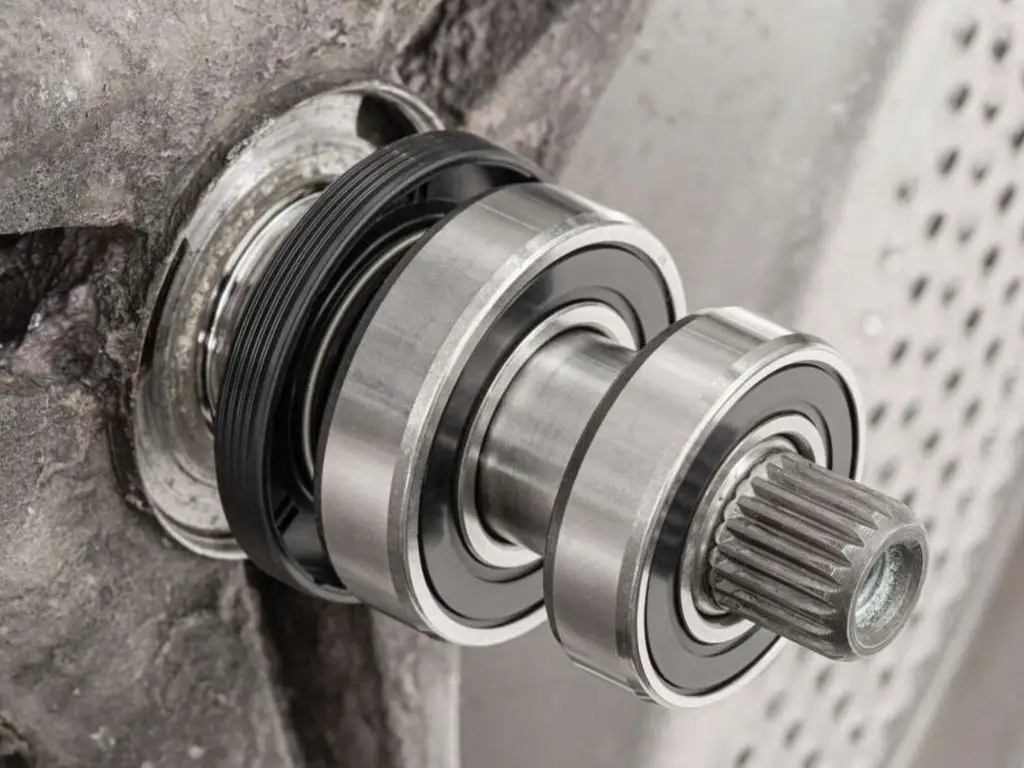
Drum bearings are the most common cause of spin-cycle squeaking, especially on front-loaders and top-loaders over five years old. They sit at the rear of the drum, letting it spin smoothly at high speed. As they wear, metal-on-metal contact produces a high-pitched squeal that rises in pitch as the drum speeds up.
Technically DIY-able, but this is one of the harder washing machine repairs — it requires removing the drum, often splitting the outer tub, and pressing out the old bearing with the right tools. On many front-loaders the bearing is sealed inside the tub, meaning the whole assembly needs replacing.
Worn or Slipping Drive Belt
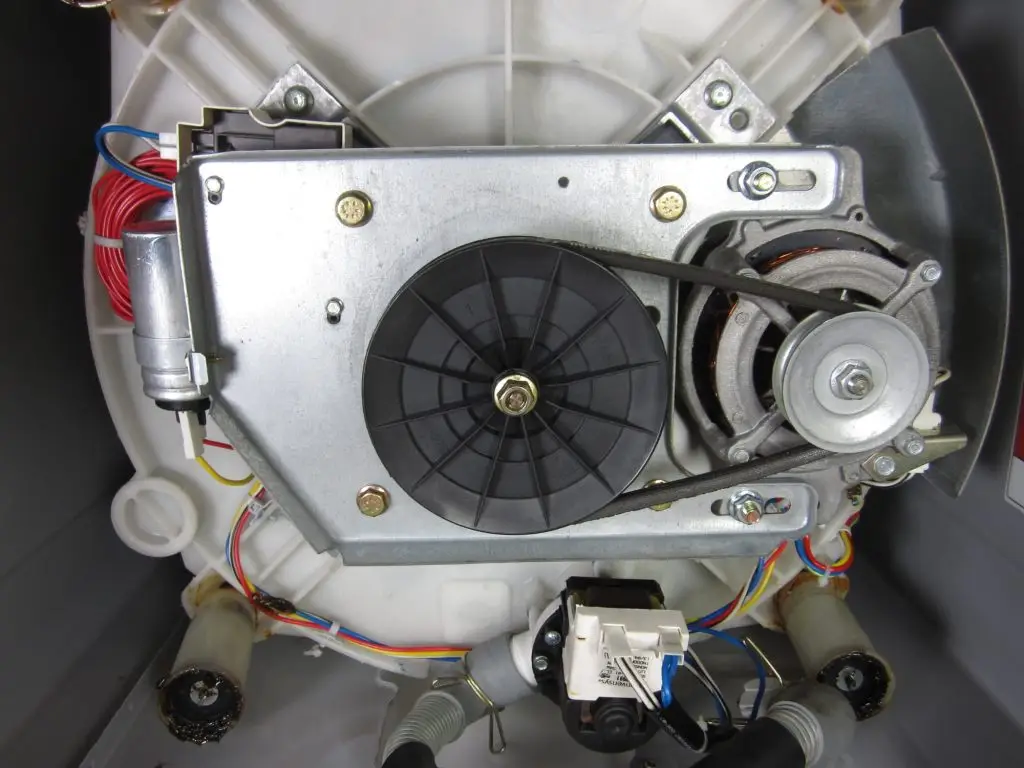
The drive belt connects the motor to the drum pulley. On belt-driven machines — most top-loaders and many older front-loaders — a worn, glazed, or stretched belt slips under the high-torque demand of the spin cycle, producing a squeak most noticeable right at the start of the spin.
This one’s genuinely DIY-friendly on most machines. A compatible replacement belt typically costs $15–$40, and installation means removing the back panel and pulling the old belt off the motor and drum pulleys.
Failing Shock Absorbers or Suspension Springs
If the spin squeak comes with shaking or the machine walking across the floor, suspect worn shock absorbers (front-loaders) or suspension springs (top-loaders). These dampen drum movement during spin — as they weaken, the drum moves excessively and can contact the outer tub, producing a rhythmic squeak or thud that matches the drum rotation.
Also DIY-friendly on most machines — shock absorbers and springs are accessible, affordable, and usually clip-fitted or bolted in.
Why Is My Washing Machine Squeaking When Agitating?
Drive Belt Slipping on Direction Changes
During agitation, a belt-driven motor reverses direction repeatedly. Each reversal momentarily loses belt tension, and if the belt is worn or the idler pulley spring is weak, it slips and squeaks on every reversal — a repetitive squeak matching the agitation rhythm.
Fix: Replace the drive belt and inspect the idler pulley and its tensioning spring.
Pump Bearing
The drain pump runs continuously during the wash cycle to circulate water, and its small internal bearing can wear and squeak, particularly in machines that have had hard water damage or debris pass through the pump filter.
Fix: Pump replacement — pumps are usually a single replaceable unit rather than a serviceable bearing. The part runs $30–$80, with moderate installation difficulty.
Worn Agitator Components (Top-Loaders Only)
On top-loaders with a central agitator, the agitator dogs — small plastic ratcheting pieces inside — can wear and squeak as they engage and release, producing a clicking squeak during the wash cycle that often sounds like a ratchet.
Fix: Agitator dog replacement is a cheap, accessible DIY repair. A set of replacement dogs costs $5–$15, and replacing them requires only removing the agitator cap and lifting out the old parts.
Why Is My Washing Machine Squeaking During the Wash Cycle?
Dry or Deteriorating Door Seal (Front-Loaders)
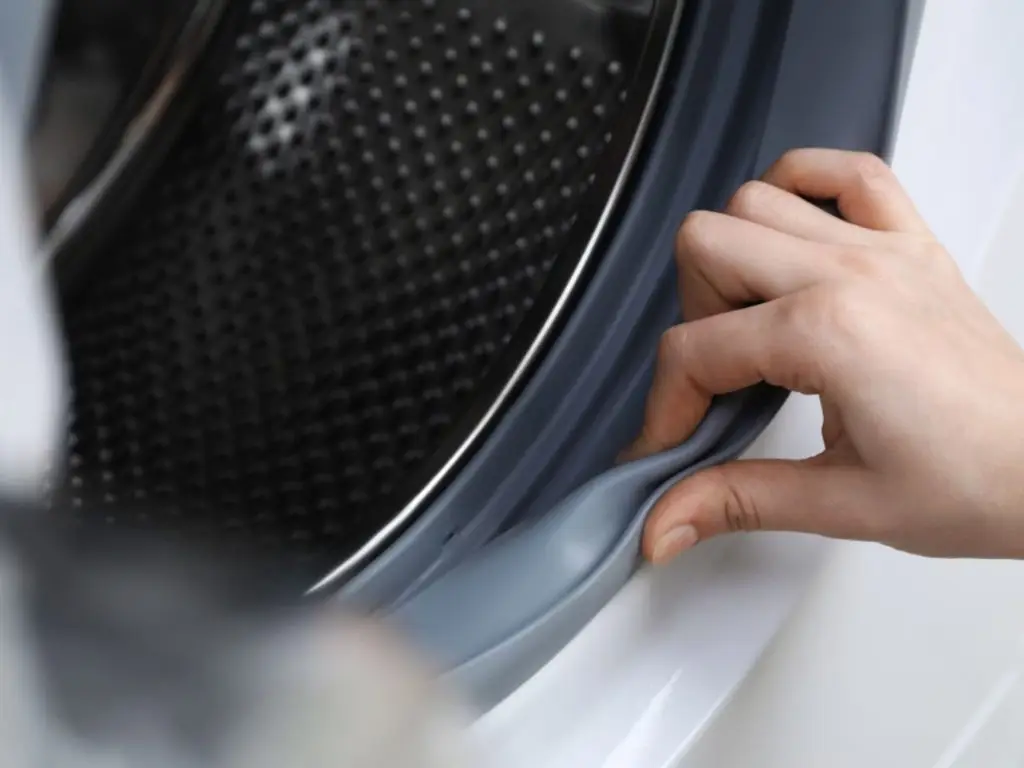
The rubber door seal on a front-loader forms a watertight barrier between the drum and the door glass. Over time the rubber dries out, stiffens, or develops a slight sticky patch. As the drum rotates, if clothing or the seal itself catches on the door glass, it produces a squeak that can occur at any drum speed.
Fix: Apply a small amount of petroleum jelly or silicone grease to the drum-side lip of the door seal — never cooking oil or WD-40. If the seal is visibly cracked, torn, or deformed, it needs replacing.
Foreign Objects in the Drum or Pump
Coins, buttons, underwire, or small items from pockets can pass through the drum holes and get trapped in the outer tub or pump housing. As the drum rotates, these objects rub against the drum or inner tub wall, producing a rhythmic squeak or scraping noise.
Fix: Clear the pump filter — this should be monthly maintenance regardless. If something has passed beyond the filter into the pump or outer tub, retrieving it may require accessing the drum area.
Machine Not Level
If all four feet aren’t firmly contacting the floor, the machine rocks during operation. That rocking creates friction at the feet and can cause the machine body to contact the worktop or side panels, producing a squeak that runs throughout the cycle.
Fix: Adjust the feet — most are threaded and turn by hand. Place a spirit level on top while adjusting, then lock the feet in position with the locking nut once level. A two-minute fix.
How Much Does It Cost to Fix a Squeaking Washing Machine?
Cost depends entirely on which component is causing the squeak:
- Agitator dogs — $5–$15 for parts, one of the cheapest fixes on this list
- Drive belt — $15–$40 for the part; $100–$180 including professional labour
- Pump replacement — $30–$80 for the part
- Shock absorbers or suspension springs — affordable and accessible on most models
- Drum bearing replacement — $200–$380 depending on the model, still cheaper than a new machine for anything under seven years old
At Maydone, a washing machine repair visit starts with a flat diagnostic fee that’s applied toward the repair cost if you move forward, so you always know the exact price before we start. First-time customers get $30 off their repair.
When to Call a Professional
Some squeaking causes are genuine DIY jobs. Others look like DIY jobs until you’re two hours in with a disassembled machine and realize you need a specialist tool or a second pair of hands. Here’s an honest breakdown.
Call a Technician For
- Drum bearing replacement — requires drum removal, specialist tools, and the bearing is often sealed inside a tub assembly that must be replaced as a unit
- Control board or motor faults — if the squeak comes with error codes, intermittent stopping, or burning smells
- Water ingress to bearings — rust streaks below the rear panel mean water has reached the bearing, and the repair scope is larger than a simple bearing swap
- Any front-loader bearing replacement — the labour required makes professional repair the practical choice on most models
Regular maintenance also catches a slipping belt or a worn shock absorber early, often before it turns into a squeak at all.
Had no luck fixing squeaking washing machine yourself?
Book an Appointment With Our Technicians Today
If you’ve tried all the tips above and your washing machine is still giving you trouble, don’t worry — our expert technicians are ready to help. Contact us today for fast, reliable support.
Maydone’s technicians serve Toronto, Vaughan, Mississauga, and the wider GTA seven days a week, with same-day service available. Call +1 (647) 558-5825 or book a washing machine repair online.
FAQ — Why Is My Washing Machine Squeaking?
What does it mean when your washing machine squeaks?
A component is experiencing friction — most commonly worn drum bearings, a slipping drive belt, or a dry door seal. Not an emergency early on, but don’t ignore it.
Why is my new washing machine squeaking when spinning?
First check the transit bolts at the back — they must be removed before first use. If they’re already out, a light squeak for the first 5–10 washes is normal break-in noise. If it’s loud or getting worse, contact the retailer under warranty.
Is it safe to use a squeaky washing machine?
It depends on the cause. An unlevel machine or a stiff door seal is fine to keep using while you fix it. Worn bearings shouldn’t be run indefinitely. If the squeak turns into a grind, stop using the machine and get a diagnosis.
Why does my washing machine squeak when spinning but not when empty?
The load itself is likely the trigger — uneven distribution, worn shock absorbers that only show under weight, or a belt slipping under the resistance of wet laundry.
How much does it cost to fix a squeaking washing machine in Toronto?
It depends on the part: drive belt replacement runs $100–$180 including labour, while drum bearing replacement runs $200–$380 depending on the model — still cheaper than replacing the machine for anything under seven years old.
Can a squeaking washing machine cause more damage if I keep using it?
Yes, in some cases. A slipping belt can wear unevenly and eventually snap mid-cycle, and worn bearings that keep running can damage the drum shaft or let water reach other components. A quick diagnosis early usually costs far less than waiting until the part fails completely.
Had no luck fixing squeaking washing machine yourself?
Book an appointment with our technicians today!
If you’ve tried all the pro tips above and your washing machine is still giving you trouble, don’t worry — our expert technicians are ready to help. Contact us today for fast, reliable support!


 BOOK NOW


